

Every few months, AI takes a leap. Many of us lean on it for work outside our specialty, like developers who are using AI for design, or designers who are using AI for development. And when you don’t have the skills to step in, you are stuck with the best version a model can produce.
I’ve been using AI for coding since day one. I would copy and paste my files into ChatGPT back in January 2023 and it would respond with code to add into each file: lines, functions, or entire files to replace.
We have come a long way since then. Now you can describe a problem and within minutes get an 80-90% solution. Nearly every new version feels like an upgrade, yet some versions are leaps that unlock new abilities that no previous model had.
The Wall
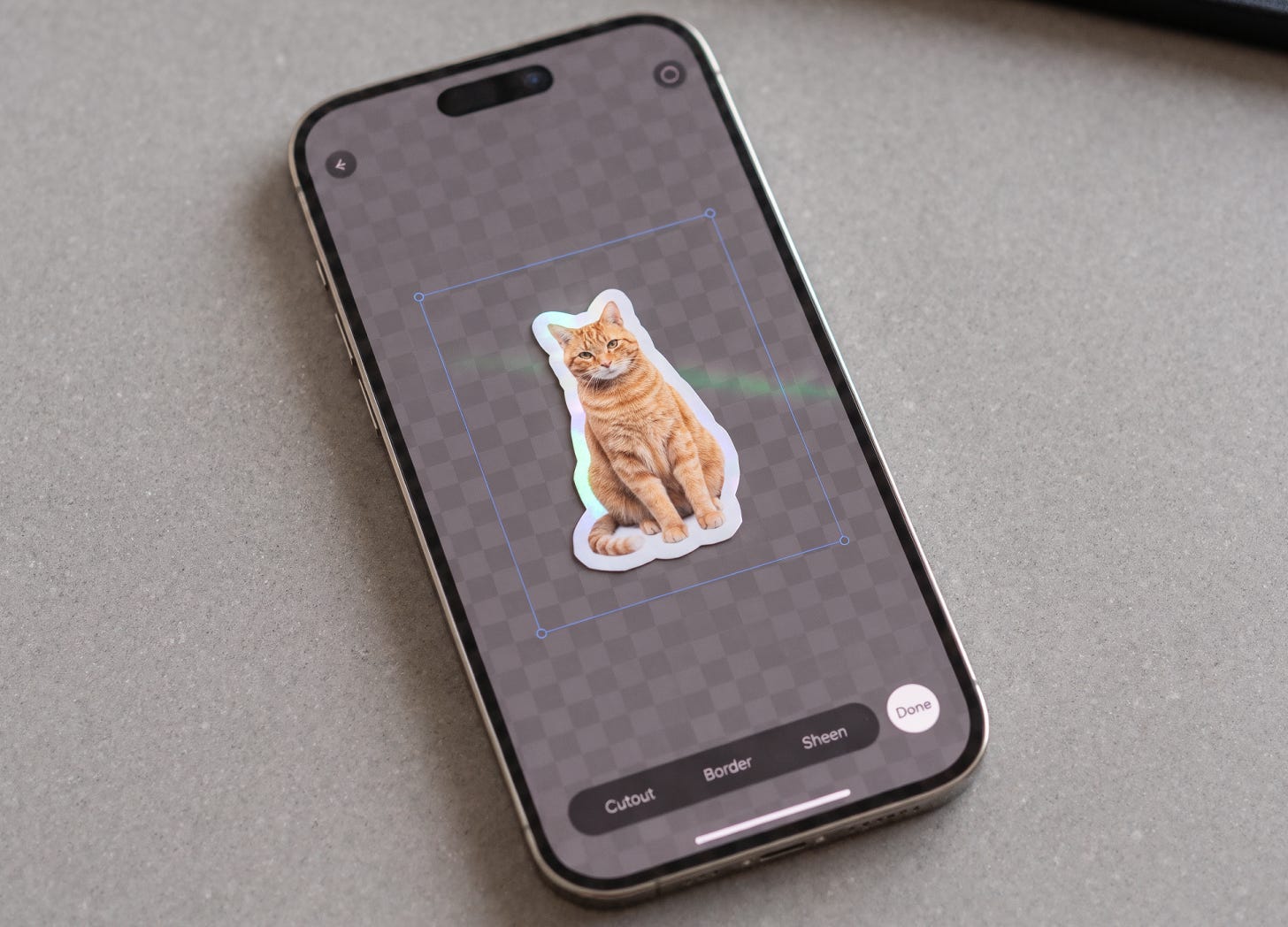
Back in spring 2025, I tried to implement a sleek stickers experience on iOS using Opus 4. A user could upload a photo and choose to convert it to a sticker.
Believe it or not, it’s not a simple straightforward design and development task.
Detect object
Cut out object ensuring the object’s edge is refined
Create a white sticker with a drop shadow behind it
Let users resize the sticker preserving proportions and alignment
Add a sheen or holographic effect responding to the device’s rotation
Dragging the sticker and incorporating paper-like physics
And ensuring the final product is performant
Since spring of 2025, I couldn’t get models to create something polished, each iteration at least a few aspects from that list felt janky.
So I created a ritual called “revisit.”
The “Revisit” Command
Simply put, whenever you spend too much time trying to get a model to create the exact thing you want, if the effort outweighs the ROI, then put it on a “revisit” list. Sometime in the future, a model will be able to accomplish the task, so this revisit list ensures you don’t lost track of these things.
All this simple markdown does is log things that are seemingly impossible or not worth the time trying to build or refine.
When I call /revisit, I specify exactly what I tried, what it did, where it fell short, and what success would look like. I then move onto something else, either punting the feature, putting it behind a feature flag to be revisited later, or ship it with the inadequacy.
The goal is to make these compromises temporary, with a clear path back to bringing every part of the project up to the same high standard.
Here’s an example of the sticker item on my markdown file:
---
## Stickers: photo to sticker (iOS)
Logged: 2025-05-26 · Model: Opus 4 · Status: Open

### Problem
Tried: user uploads a photo, taps "Make sticker."
Asked for: cutout, white border, drop shadow,
rotation-based sheen, drag physics.

What it did:
- Detects the subject, but edges are jagged
- White border is uneven around curves
- Shadow looks flat, like a filter
- Sheen doesn't follow device rotation smoothly
- Dragging feels stiff, nothing like paper
- Stutters with several stickers on screen

Where it fell short:
It works, but it's janky. Nothing about it delights.

### Desired solution
- Refined edges on any subject (hair, fur, glass)
- Even white border that follows the contour
- Soft drop shadow with real depth
- Sheen or holographic effect that tracks rotation
- Pinch to resize, proportions and alignment kept
- Paper-like physics: lift, curl, settle on drop
- Smooth at 60fps, even with many stickers
- The bar: looks like a lead designer made it
---
Every new model that gets released, I pick a sample of items from my revisit list. For example, after more than a year of iterating on the sticker feature, Opus 5.5 finally unlocked the stunning sticker style I envisioned from the very beginning.
The future.
I suspect that we aren’t too far from a future where our /revisit list stays empty. One or two more leaps like Opus 5.5 could put almost anything we imagine within reach.
For now, use /revisit.
With each new model, pick an aspect of your product: UI, UX, performance, data science and try it again. Make it a ritual, bringing every part of your product up to the same high standard.